How a Week in Kyoto Changed My Understanding of Japanese Aesthetics
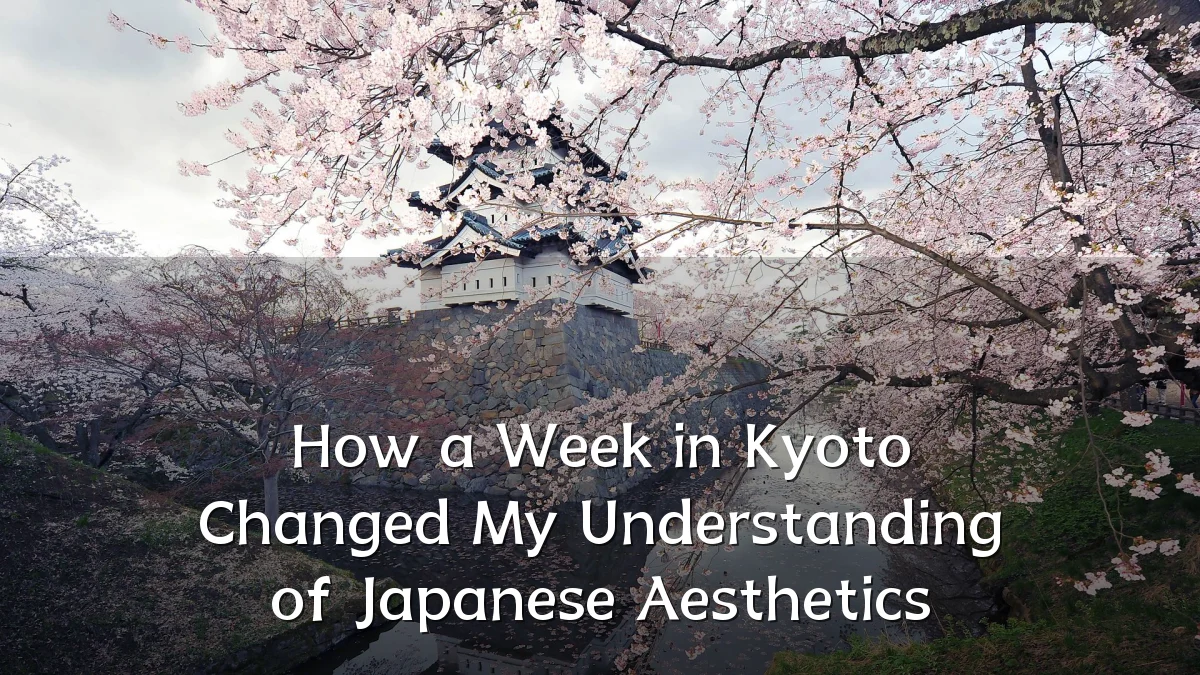
In recent years, cultural travel essays have shifted from simple diary entries to analytical reflections that connect personal experience with broader aesthetic principles. The fixed title above captures a growing reader interest in how short, immersive stays can transform one's perception of a culture's visual and philosophical language.
Recent Trends in Cultural Travel Writing
Travel content now often prioritizes emotional and intellectual transformation over checklist sightseeing. Readers seek narratives that explain why a place feels different, not just what was seen. Three observable trends stand out:
- Experiential deep-dives – Articles that spend days on a single art form (tea ceremony, kintsugi, ikebana) to unpack cultural logic.
- Contrast with home aesthetics – Writers compare Japanese concepts like wabi-sabi or ma to Western ideals, highlighting perceptual shifts.
- Authenticity over influencer-style imagery – Audiences favor honest accounts of adjustment, confusion, and gradual understanding over polished surfaces.
Background: The Shift in Travel Narratives
Early 2000s travel writing often described famous temples, gardens, and cuisine without probing why these elements feel cohesive. Contemporary readers, however, expect essays to trace the cause-and-effect of aesthetic experience. For example, a writer might note how Kyoto’s seasonal gardens teach impermanence through planned decay — a lesson that reshapes the visitor’s own appreciation of time and beauty. This background context helps explain why a focused week in a single city can now generate such a reflective piece.

User Concerns: Authenticity and Depth
When reading a title like How a Week in Kyoto Changed My Understanding of Japanese Aesthetics, skeptical users often worry about superficiality. Common concerns include:
- Commodification of culture – Does the essay reduce complex traditions to "lessons" for tourists?
- Overgeneralization – Can a single week truly capture Japan’s varied aesthetic philosophy, or does it risk stereotyping?
- Missed daily life – Does the narrative ignore the tension between preserved traditions and modern Kyoto?
Neutral analysis suggests these concerns are valid, but the best essays address them directly by framing the writer’s perspective as partial, evolving, and humble rather than authoritative.
Likely Impact on Readers and Writers
A reflective essay of this kind influences both audiences and the travel content industry in concrete ways:
- For readers: Encourages deeper preparation before traveling — learning about shibui or yūgen enriches on-site experience.
- For writers: Sets a standard of vulnerability and intellectual curiosity, pushing beyond "Top 10" lists.
- For the genre: Normalizes short-form cultural analysis that prioritizes internal change over visual documentation.
What to Watch Next
The future of cultural travel essays may develop in three directions:
- Longitudinal pieces – Writers returning to Kyoto after years to see how their aesthetic understanding evolves over multiple stays.
- Comparative frameworks – Side-by-side essays contrasting Kyoto with other high-cultural destinations (e.g., Florence, Varanasi, Marrakech).
- Multimedia integration – Subtle audio or photo supplements that illustrate design principles without overpowering the narrative.
As readers demand more substance from travel stories, the trend toward thoughtful, personal analysis of aesthetic systems is likely to continue. A single week in Kyoto — when approached with openness — can indeed become a lens for re-examining one’s own cultural assumptions.