Discover the Hidden Gems of the Caucasus: A Cultural Traveler's Guide
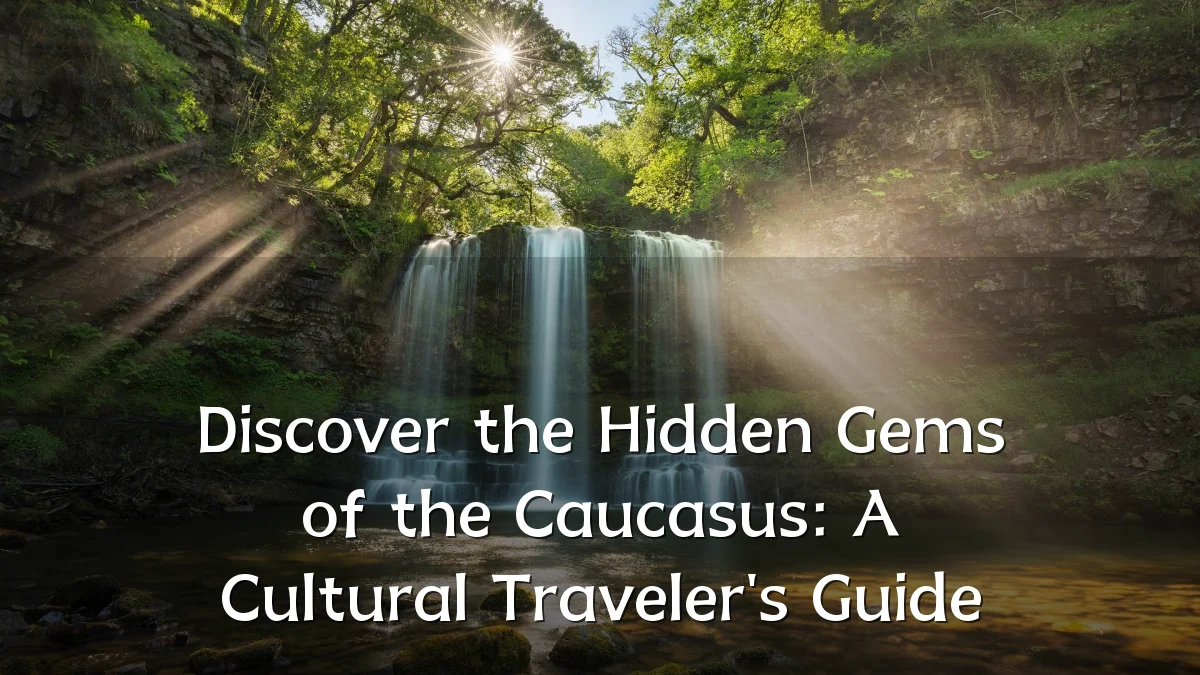
The Caucasus region, straddling Europe and Asia, has seen a steady increase in independent travelers seeking authentic cultural experiences beyond mainstream European routes. While still less frequented than many neighboring destinations, the three main countries—Georgia, Armenia, and Azerbaijan—offer distinct historical layers, diverse languages, and unique traditions that appeal to the modern cultural traveler. This analysis examines current trends, practical concerns, and the likely trajectory for travelers heading to the Caucasus.
Recent Trends
Interest in the Caucasus has risen over the past few years, driven by several observable shifts:

- Growth in solo and small-group cultural tours focusing on wine routes, ancient churches, and Silk Road history.
- Increasing visibility on social media platforms, especially for Georgia’s mountainous Svaneti region and Armenia’s monastic complexes.
- A rise in low-cost carrier routes to Tbilisi, Yerevan, and Baku, making the region more accessible from European hubs.
- More travelers combining two or three Caucasus countries in a single trip, often using overland connections despite border complexities.
- Emergence of community-based homestays and local guide initiatives, particularly in rural areas.
Background
The Caucasus has long been a crossroads of empires, religions, and trade. Each country carries a distinct identity: Georgia is known for its ancient winemaking and Orthodox Christian heritage; Armenia boasts one of the world’s oldest Christian civilizations; Azerbaijan blends Persian, Turkic, and Soviet influences with a secular Muslim-majority population. Political boundaries have shifted frequently in the post-Soviet era, and conflicts—notably over Nagorno-Karabakh and the breakaway territories of Abkhazia and South Ossetia—have shaped travel advisories. However, in recent years, most mainstream tourist areas have remained stable and open to visitors, with increasing investment in tourism infrastructure.

User Concerns
Travelers considering the Caucasus commonly raise several practical issues:
- Safety and political stability: While central cities and major tourist routes are generally safe, proximity to disputed zones requires awareness. Travelers should check current advisories before crossing certain borders.
- Language barriers: English is not widely spoken outside tourist hubs. Basic phrases in local languages or translation apps are helpful, especially in rural areas.
- Transportation: Public buses and marshrutkas (minibuses) cover most destinations but can be crowded and infrequent. Renting a car with a driver is common for remote sites.
- Visa requirements: Georgia offers visa-free entry for many nationalities; Armenia provides e-visas or visa on arrival for most; Azerbaijan requires an e-visa for many passport holders, with stricter rules for those with certain travel history or Armenian visas in their passport.
- Accommodation quality: Ranges from modern hotels in capitals to basic guesthouses in villages. Booking in advance during peak season (May–October) is recommended.
- Cultural etiquette: Dress codes apply at religious sites; photography in churches or mosques may be restricted. Hospitality customs, such as toasting traditions, are important to understand.
Likely Impact
The growing attention on the Caucasus is expected to shape the travel landscape in several ways:
- Increased tourism revenue for local economies, particularly in smaller towns and rural areas that depend on seasonal visitors.
- Pressure on infrastructure, including roads, water systems, and waste management, especially in popular national parks and historical sites.
- Greater need for sustainable tourism practices to preserve fragile cultural and natural assets, such as medieval frescoes and alpine ecosystems.
- Potential for cross-border cooperation on travel corridors if political tensions ease, enabling smoother multi-country itineraries.
- Risk of over-commercialization in certain hotspots (e.g., Tbilisi’s Old Town, Stepantsminda) if visitor numbers rise rapidly without management.
What to Watch Next
Several developments will influence how the Caucasus region evolves as a cultural travel destination:
- Border reopening between Armenia and Turkey or Armenia and Azerbaijan could dramatically alter overland travel routes, though progress remains uncertain.
- New airline routes and rail connections (e.g., the Tbilisi–Baku–Kars railway) may open up additional itineraries.
- Infrastructure projects funded by international organizations, such as road improvements in Georgia’s mountainous regions, will affect accessibility.
- Cultural festivals and commemorations (e.g., Tbilisoba, Vardavar in Armenia, Novruz in Azerbaijan) draw increasing international attention and can be high points for cultural travelers.
- Local travel regulations, including visa policy updates and requirements for guides in protected areas, will shape independent travel flexibility.
For cultural travelers seeking a destination that rewards curiosity with depth, the Caucasus remains a compelling choice—provided they stay informed on current conditions and respect the region’s complex heritage.