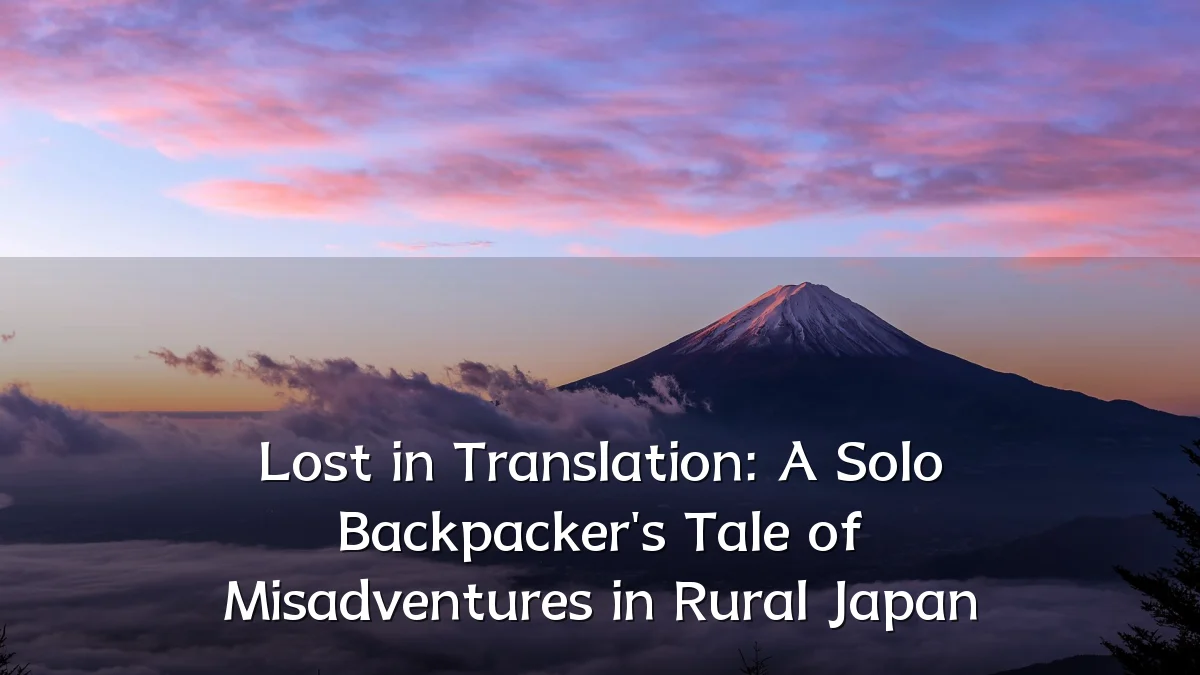
Lost in Translation: A Solo Backpacker's Tale of Misadventures in Rural Japan
Recent Trends in Story-Driven Trip Reports
The rise of narrative-style travel content—often called "story-driven trip reports"—has reshaped how solo backpackers share their journeys. Rather than listing itineraries and costs, these reports focus on the emotional arc, the unexpected hurdles, and the small cultural collisions that define an authentic experience. Platforms like personal blogs, Substack newsletters, and long-form YouTube essays have fueled a shift from transactional travel guides to immersive storytelling.

Key characteristics of the trend include:
- Emphasis on miscommunication and mishap as a source of narrative tension, not failure.
- Use of first-person, often self-deprecating voice to build relatability.
- Integration of local customs, language gaps, and logistical challenges as plot points.
- A deliberate departure from polished, "Instagram-perfect" travel imagery.
Background: The Allure and Risk of Rural Japan for Solo Backpackers
Japan’s countryside offers a dramatically different experience from its hyper-efficient cities. Remote villages, mountain onsen towns, and lesser-known coastal routes attract travelers seeking solitude and authenticity. However, these areas also present distinct obstacles for non-Japanese speakers: signage is often only in Japanese, English proficiency may be low, and local transportation schedules can be sparse and irregular. Rural guesthouses and minshuku often operate on a cash-only, reservation-by-phone model, compounding the language barrier. Solo backpackers in particular face the challenge of navigating these systems without a partner to help interpret or second-guess decisions.

- Transportation: Fewer trains, limited taxi services, and bus stops without English timetables.
- Accommodation: Many ryokan and family-run lodgings expect advance calls or direct booking in Japanese.
- Meals: Menus can be exclusively in kanji; dietary restrictions are difficult to communicate.
- Emergency assistance: In rural areas, English-speaking support via phone or at hospitals is minimal.
User Concerns: What Solo Travelers Want from These Narratives
Readers of story-driven trip reports are often planning their own trips and look for honest, actionable insights. Common concerns that emerge in such accounts include the fear of embarrassment, anxiety over making cultural mistakes, and the practical question of what to do when things go wrong. In the case of a tale titled "Lost in Translation," audience expectations revolve around:
- How to handle a serious miscommunication without causing offense.
- Whether to rely on technology (translation apps, SIM cards) or learn key phrases in advance.
- Risk mitigation strategies for solo travel in low-English areas (e.g., carrying printed directions, booking via agencies).
- Emotional resilience: how other solo backpackers coped with isolation or confusion.
These reports also serve as cautionary but empowering examples—showing that even a string of misadventures can become a memorable, character-building journey.
Likely Impact on Travel Planning and Content Creation
As story-driven trip reports gain traction, they shift how travel brands and tourism boards market rural destinations. Instead of highlighting only pristine landscapes, future campaigns may incorporate realistic narratives about language and logistics. For the solo backpacker community, these tales encourage better preparation: learning basic Japanese phrases, carrying offline maps, and researching local customs. On the content-creation side, the popularity of flawed-hero stories means more writers will prioritize vulnerability over perfection. This could lead to a richer, more honest body of travel literature, but also risks romanticizing hardship if not balanced with practical advice.
- Travel planning: More backpackers will book guided rural tours or homestays with a host who speaks some English.
- Technology: Expect bundled travel apps that incorporate real-time translation and local emergency contacts.
- Media: Bloggers may adopt a standard "What I Wish I Knew" section after the narrative to address factual gaps.
What to Watch Next
Look for further development in these areas:
- Local tourism responses: Will rural prefectures introduce English-friendly signage or phone-based interpretation services based on the popularity of tales like these?
- Platform evolution: Will dedicated "story-driven trip report" segments emerge on platforms like YouTube or Substack, separate from standard Vlogs?
- Cross-cultural empathy: How will Japanese rural communities react to narratives that highlight miscommunication—will they see them as valuable feedback or as negative portrayals?
- Insurance and safety products: Expect niche insurance policies tailored to solo backpackers that cover language-assistance hotline costs.
The story of being "lost in translation" is far from new, but the lens of the solo backpacker in rural Japan is proving to be a compelling, evergreen subject for those who seek travel’s raw edges.