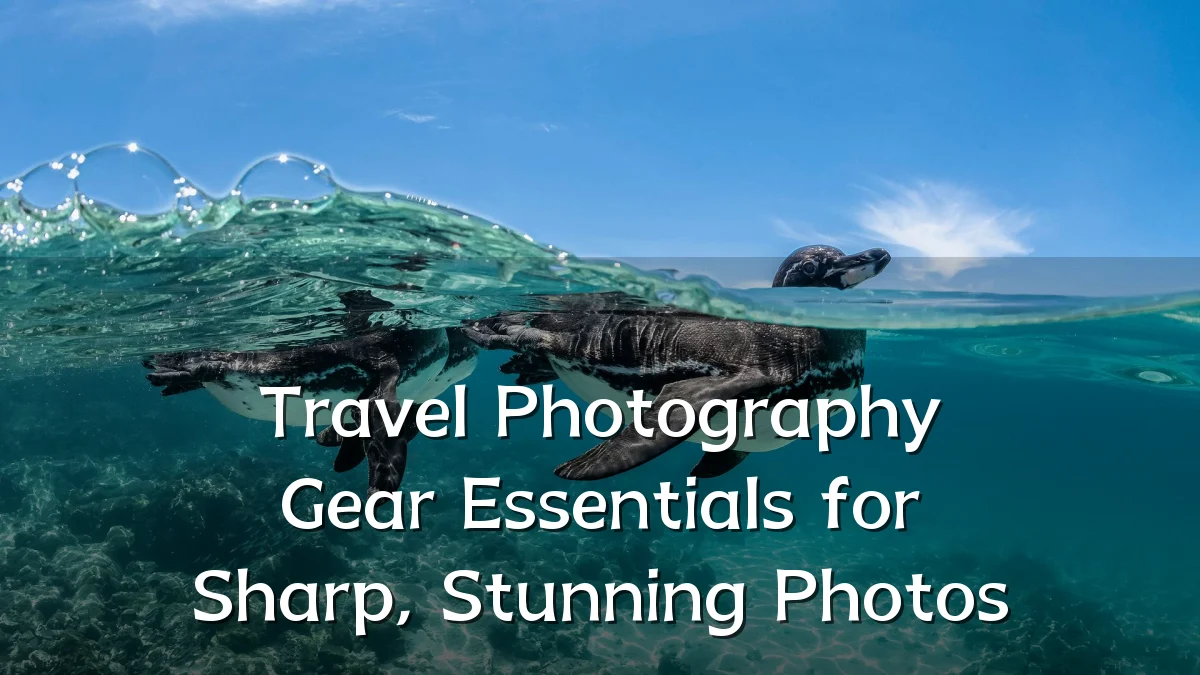
Travel Photography Gear Essentials for Sharp, Stunning Photos
Recent Trends
Over the past few seasons, travel photographers have gravitated toward lighter, more versatile kits. Mirrorless systems continue to outsell DSLRs in the compact travel segment, while smartphones now offer computational photography modes that rival entry-level dedicated cameras. At the same time, gear manufacturers are emphasizing weather sealing and modular lens systems that allow photographers to adapt quickly to changing conditions without carrying multiple bodies.

- Rise of ultra‑compact full‑frame mirrorless cameras with stabilised sensors.
- Smartphone sensors with multiple focal lengths (wide, ultrawide, telephoto) used as primary travel cameras by many non‑professionals.
- Increased availability of lightweight, fast‑aperture prime lenses designed specifically for travel.
- Growing interest in tripods that weigh under 1 kg yet support full‑frame bodies and telephoto zooms.
Background
The concept of “travel photography gear essentials” has shifted as airlines tighten carry‑on weight limits and digital storage replaces film. A decade ago, travellers often carried heavy zoom lenses and a large tripod. Today, the emphasis is on a compact “holy trinity” – a stabilised body, one or two versatile zooms, and a small, quick‑deploy tripod. Image stabilisation in‑body and in‑lens has reduced the need for bulky support gear, while high‑resolution sensors demand sharper optics for truly crisp results.

Manufacturers have responded by releasing lenses that cover common travel focal ranges (e.g., 16‑35 mm f/4, 24‑70 mm f/2.8, 70‑200 mm f/4) in lighter formats. Meanwhile, aftermarket accessories such as clip‑on neutral‑density filters and ultra‑compact wireless remote releases have become standard in travel kits.
User Concerns
Photographers evaluating travel gear commonly raise three main issues:
- Weight vs. image quality: A lighter lens may have a slower aperture, reducing low‑light performance. Users must decide whether to sacrifice speed for portability or accept a moderate weight increase.
- Durability in diverse climates: Dust, humidity, and rain are frequent travel hazards. Gear without adequate sealing risks sensor dust spots and lens fungus.
- Battery and storage constraints: Mirrorless cameras consume power quickly, especially when using electronic viewfinders or stabilisation. Multi‑day trips require a plan for recharging and multiple memory cards.
Many travellers also worry about security – both theft and accidental damage – and whether their combination of lenses can cover everything from sweeping landscapes to close‑up street portraits without frequent lens changes.
Likely Impact
As sensor technology improves, the gap between professional and enthusiast gear narrows. More travellers will likely adopt a “minimalist but capable” kit centred on a single high‑resolution body and a standard zoom that covers 24‑70 mm (full‑frame equivalent). The need for a dedicated telephoto may decrease for those focused on urban and landscape travel, while wildlife‑oriented travellers will still require longer reach.
Cloud‑based backup solutions are becoming faster and more reliable, meaning fewer travellers will carry large external hard drives. At the same time, smartphone integration – such as shooting raw files and editing on‑the‑go – will continue to blur the line between dedicated camera gear and phone photography. For the foreseeable future, however, anyone seeking printed enlargements or maximum editing flexibility will still benefit from a dedicated camera and well‑chosen glass.
What to Watch Next
- Further miniaturisation of full‑frame sensors and lenses, possibly reducing kit weight by another 15‑20% in the next generation.
- Improved in‑camera computational tools (e.g., multi‑shot noise reduction, focus stacking) that reduce the need for external accessories.
- Rise of subscription‑based gear rental for travellers who want top‑end optics for a single trip without purchase commitment.
- Development of universal lens mounts with adaptable electronics, allowing cross‑brand lens usage without autofocus sacrifice.
- Advances in portable power banks capable of charging a camera battery multiple times, potentially eliminating the need for multiple spare batteries.